
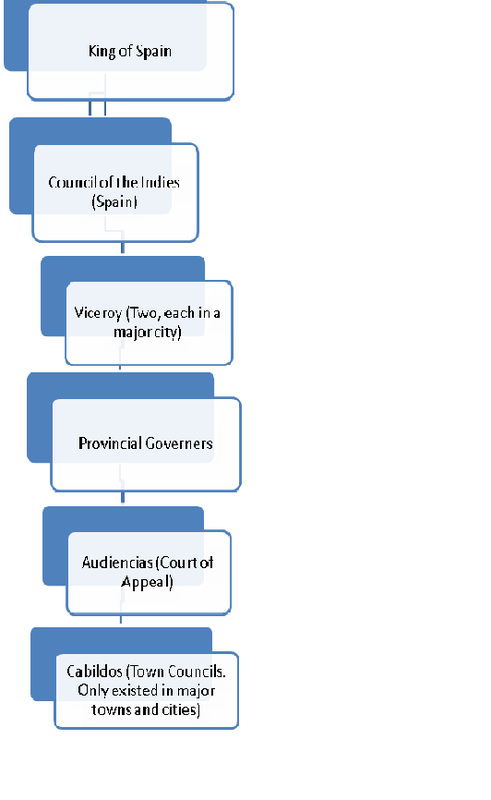
The North American colonies also had better political experience. In the Latin American colonies, there were leaders that were part of the nobility that were five rungs lower on the political ladder than the king. This meant that the common people had no
political power or experience whatsoever. In the publishing, American Passages by Edward L. Ayers, it says, "Niether Spanish colonists or Indians had much say in making and enforcing laws." In the North American colonies, the local people could be a part of the political system. If a colonist was at the lowest rung of the ladder, they were only two rungs from the king. This meant that when it was time to govern themselves, the northern colonies had political experience and could more successfully run themselves than their neighbors to the south.

Lastly, the North American colonies had better reparations and relationships with their former colonial power. When Haiti became independent, it was forced to pay an indemnity to France. In the book “France's Debt of Dishonour to Haiti” by Isabel Macdonald, it says the total amount payed was about "90m gold francs to France." This kept Haiti crippled and drained their treasuries to the point where they were in endless poverty. Even to this day, France has not payed back the unjust indemnity to Haiti. When the American colonies became independent, there were articles in the Treaty of Paris that specifically addressed monetary issues between the two nations. One article stated, "That there shall be no future confiscations made nor any prosecutions commenced against any person or persons for, or by reason of, the part which he or they may have taken in the present war, and that no person shall on that account suffer any future loss or damage, either in his person, liberty, or property;" This prevented the U.S. from suffering the same outcome as Haiti did. This allowed their economy to thrive and have no major setbacks of the kind. Having not been exploited by British power, the northern colonies "rivaled England itself, as in fisheries and shipbuilding". The North American colonies had better reparations and relationships with their former colonial power which allowed their nation to develop better than their neighbors to the south because of the agreements set to prohibit an indemnity.
(Treaty of Paris)

No comments:
Post a Comment