
Wednesday, November 27, 2013
King Andrew VII

Friday, November 22, 2013
Democracy Doesn't Come Cheap
Democracy should be defined as a form of government where free adult citizens vote for their own leader. This view of democracy was very different than how the 19th century U.S. viewed it. The U.S. used to base voting rights off of how wealthy you were or how much land you owned. The theory was that a citizen had to have some stake of the city that they were voting in to have a vote. This is flawed because some people who are unworthy or unqualified to vote can do so because they have land, but someone with no land cannot vote, no matter how qualified. This quote by Benjamin Franklin illustrates how the U.S. valued property over experience. “Today a man owns a jackass worth fifty dollars and he is
entitled to vote; but before the election the jackass dies. The man in the meantime has become more
experienced, his knowledge of the principles of government, and his
acquaintance with mankind are more extensive, and he is therefore better
qualified to make a proper selection of rulers – but the jackass is dead and
the man cannot vote. Now gentlemen, pray
inform me, in whom is the right of suffrage?
In the man or in the jackass? This quote is questioning what gives the right for an individual to vote. Franklin obviously favors having suffrage given to men with more experience than ones with wealth. In today's world, you could be the richest person in your town, but if you are not suitable to vote for a leader, then you do not get to vote.

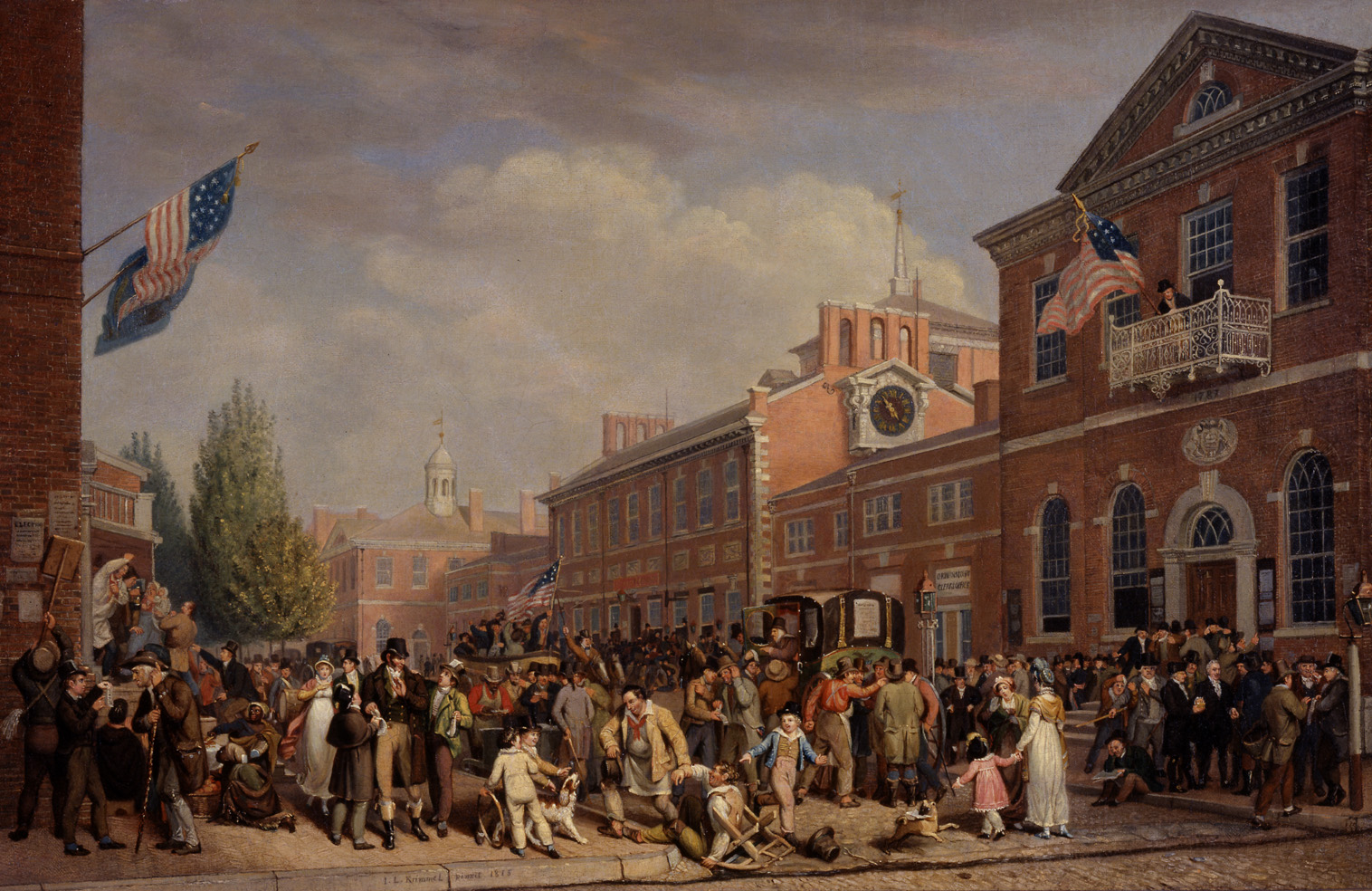
This photo shows a scene from a 19th century election in a town square.
Wednesday, November 20, 2013
Romanticism

Four themes of Romanticism are awe of nature, focus on the individual, grotesque artwork, and emotional thought.
Romanticism was a movement in reaction to the Enlightenment. The qualities of Romanticism directly contradicted Enlightenment ideas. While the Enlightenment was focused on the control of nature, focus on the majority, beautiful artwork, and intellectual thought, Romanticism was geared towards the awe of nature, focus on the individual, grotesque artwork, and emotional thought. Awe of nature is shown in this painting because of the valley the pilgrim is in. The walls are so tall, he can barely even see the sun. He is puny and powerless in comparison to nature so that is why this painting shows awe of nature. There is only one person in this painting, and he is in the foreground of the painting, so that shows that this painting focuses on the individual, like the Romanticist movement. This painting is not very clear and is not strictly beautiful. The painting has the Romantic quality of being grotesque for this reason. The painting also provokes emotional thought. When looking at this painting, many questions come to mind. What is that man doing there? How did he get there? Where is her going? Many questions like that arise when looking at the painting. This is hwo this painting shows four themes of the Romanticist movement.
Monday, November 18, 2013
Revolutions of 1830 & 1848
In 1830 and 1848, there were many revolts within Europe. These revolts were fueled by liberal, republican, and nationalist ideas. Although many of these revolutions were unsuccessful, they still are very important in history. Three of the revolutions that took place in this time period will be judged by their success and failure.

The Decemberist's Revolt of 1825 took place in Russia. This revolution was driven by the people, who wanted liberal changes in the form of a new constitution. Already upset by the fact that Poland, a country Russia had defeated, was given a new constitution by Russia, the people planned to kill the Russian leader, Tsar Alexander. But before they could execute their plan, Tsar Alexander died, leaving Tsar Nicholas the throne. Knowing that Tsar Nicholas was a conservative. meaning it was unlikely that Russia would receive a new constitution in the near future, the people attempted to take advantage of the transition of power, and started a revolution against Tsar Nicholas. At first, the Tsar was hesitant on resisting the revolt of his own people, but soon after he swore that all revolutionists would be dealt with no mercy. The revolution was almost a complete and utter failure. No changes were made, and the people actually lost some rights.
The French Revolution of 1830 was the first of two revolutions within an 18 year period in France. The reason for the revolution was because Liberals wanted a constitutional monarchy instead of an absolute monarchy. The Radical Republicans wanted to eliminate the monarchy all together and create a republic in France. The French people set up barricades in the streets and killed soldiers to try to rebel against Charles X. The French people managed to force King Charles X out of France, leaving Louis Philippe to take the throne. This did not work out very well for the majority of the French people because only the upper bourgeoisie gained anything. The vast majority of the French people still could not vote. The revolution was not very successful because only the upper class received any rights.
The French Revolution of 1848 was the second of the two revolutions within an 18 year period in France. This revolution was fueled by Radical Republicans wanting to end private property, and liberals wanting extended suffrage. The recession in France also sparked the revolution, causing Louis Philippe to renounce his throne. He was replaced by Louis Napoleon, the nephew of Napoleon Bonaparte. Louis Napoleon held the majority of the votes out of the nine million Frenchmen that voted. However, Louis Napoleon declared himself emperor and basically put the French people back to square one. This revolution was partly a success and partly a failure because while they did get what they wanted by having the right to vote for Louis Napoleon, they ended up having their suffrage taken away again when Louis Napoleon declared himself emperor.
The photo above is an allegory that shows the French people fighting in the French Revolution of 1848
This is the link to the Decemberist's Revolt Project: http://www.showme.com/sh/?h=kaaANVo
Thursday, November 7, 2013
The Monroe Doctrine
The US reacted to the dominant conservative ideology of the Quintuple Alliance by doing three things. One thing they did was negotiate the western seaboard with Russia. Russia claimed the territory belonged to them, when the US and other countries had a share of it. The US resolved this by telling Russia they could not just claim land that belonged to the US. Another way the US reacted was preventing anymore European colonization in the Western Hemisphere. The Monroe Document clearly states: "by the free and independent condition which they have assumed and maintain, are henceforth not to be considered as subjects for future colonization by any European powers...." The US told the Alliance that if they tried to retake the old Spanish colonies, the US would fight with the old colonies to prevent it. The last way the US responded was not forming an alliance with Britain. The US decided to not be involved with Europe any longer and decided it will be more involved in world matters, not letting the world be run solely by Europe any longer.

This quote is an example of the US not letting Europe recolonize the western hemisphere. The rest of the world would have been unhappy and a little shocked by this quote. They would have been shocked that a country that became independent not even 50 years ago was prepared to defend against European colonization. The facial expression in the picture represents the US Congress's reaction to the quote. They are pleased because they do not want Europe to have any colonies in the Western Hemisphere.

This quote is an example of the US not letting Europe recolonize the western hemisphere. The rest of the world would have been unhappy and a little shocked by this quote. They would have been shocked that a country that became independent not even 50 years ago was prepared to defend against European colonization. The facial expression in the picture represents the US Congress's reaction to the quote. They are pleased because they do not want Europe to have any colonies in the Western Hemisphere.
Tuesday, November 5, 2013
Congress of Vienna
One of the concepts discussed at the Congress of Vienna was the Holy Alliance. The congress used the Holy Alliance as a way to suppress future rebellions in Europe. The countries in the Alliance would use the Principle of Intervention to help each other should a rebellion form. This was put in place as a response to the Haitian Revolution. This concept would have pleased Metternich greatly because it would help keep the monarchy in power. Metternich was a conservative, so he did not want the political system to change. The Holy Alliance helped stop many rebellions that arose after the Haitian Revolution and kept the monarchy in power in Europe longer.

Above is a picture of the countries in the Holy Alliance
Sunday, November 3, 2013
Vine Ideologies
Our Vine helps define the ideology of nationalism. Nationalism is the ideology of standing behind and supporting ones country. The two people wearing Italian flags symbolize the citizens of Italy. The shaking of hands symbolizes them joining forces to fight the foreign ruler. The person with the crown symbolizes the foreign French ruler. The two Italian citizens take down the foreign ruler because they are nationalists and will not stand for a French man to rule Italy. Nationalism inspired countries to revolt against foreign rulers, such as Italy did with France.
The other two ideologies that influenced the social and political actions of the 19th century as well. Conservatism was the ideology that tradition was the only way to tun government. This ideology was used when the Holy Alliance was formed. The Holy Alliance was formed after the Haitian Revolution to help stop any future uprisings. Another example is Joseph de Maistre's Essay on the General Principle of Political Constitutions, which opposed reform and change. The alliance wanted to keep the monarchy strong and to keep old traditions. The other ideology is Liberalism. Liberalism is the ideology of reform. Liberalism was an idea in Adam Smith's Wealth of Nations. Liberalism also affected the Haitian Revolution because the slaves wanted change so they revolted against the conservative French government and reformed their society.
Sunday, October 27, 2013
North American Colonists vs. Latin America Colonists
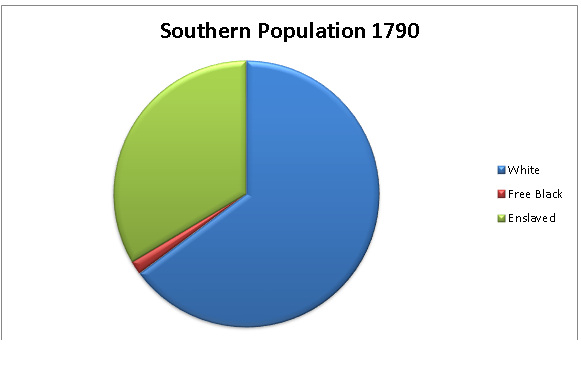
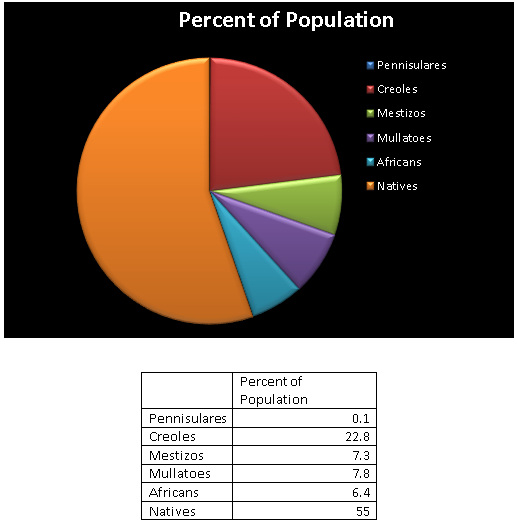
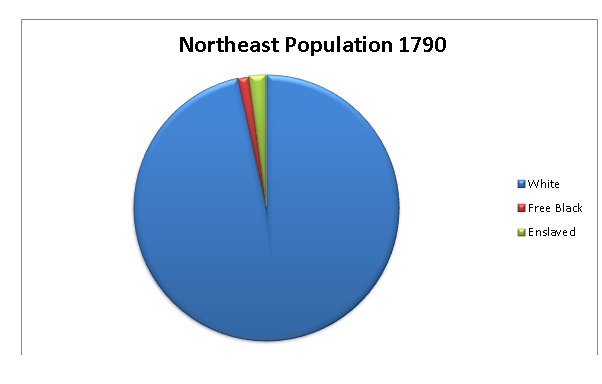
The North American colonists were a lot better prepared for independence than their neighbors to the south for many reasons. One reason was the fact that the North American colonists were more literate. The literacy rate in the North American colonies in the 1800's was around 90%. In Empire to Nation by Joseph Escherick, the literacy rate of the Latin American colonies "could not have been much higher than 10 percent overall, with much of the literate population compressed spatially into the cities, and socially into the upper reaches of the social hierarchy,". Also, the population in the northern colonies was predominantly white, while the population in the southern colonies was predominantly composed of natives at the bottom of the social pyramid. This is a factor because the poor and slaves did not become educated, so having more slave and lower class population, like the Latin American colonies, affected their literacy rate due to the large percentage of people who could not become educated. This meant that the North American colonists could form a more stable government with a better educated population than in Latin America because of their higher free and white population. This also gave the northern colonies an edge in science and other technological advances than their neighbors to the south.
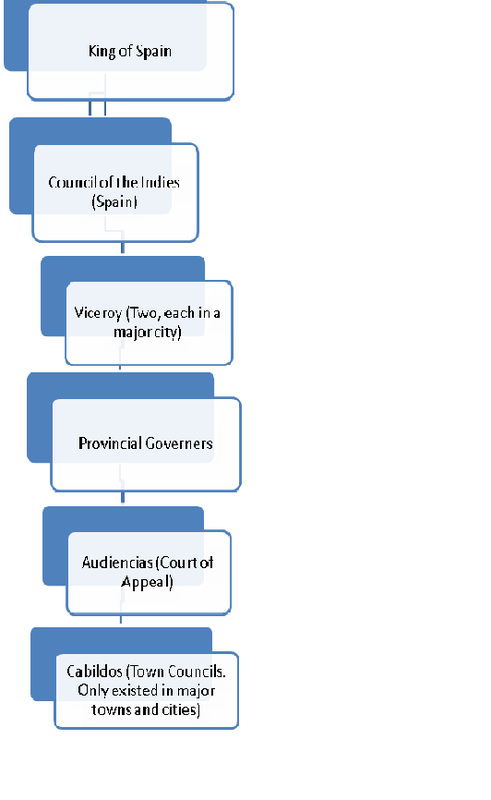
The North American colonies also had better political experience. In the Latin American colonies, there were leaders that were part of the nobility that were five rungs lower on the political ladder than the king. This meant that the common people had no
political power or experience whatsoever. In the publishing, American Passages by Edward L. Ayers, it says, "Niether Spanish colonists or Indians had much say in making and enforcing laws." In the North American colonies, the local people could be a part of the political system. If a colonist was at the lowest rung of the ladder, they were only two rungs from the king. This meant that when it was time to govern themselves, the northern colonies had political experience and could more successfully run themselves than their neighbors to the south.


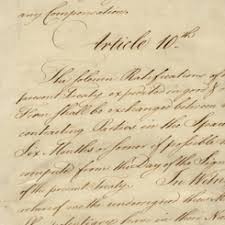
Lastly, the North American colonies had better reparations and relationships with their former colonial power. When Haiti became independent, it was forced to pay an indemnity to France. In the book “France's Debt of Dishonour to Haiti” by Isabel Macdonald, it says the total amount payed was about "90m gold francs to France." This kept Haiti crippled and drained their treasuries to the point where they were in endless poverty. Even to this day, France has not payed back the unjust indemnity to Haiti. When the American colonies became independent, there were articles in the Treaty of Paris that specifically addressed monetary issues between the two nations. One article stated, "That there shall be no future confiscations made nor any prosecutions commenced against any person or persons for, or by reason of, the part which he or they may have taken in the present war, and that no person shall on that account suffer any future loss or damage, either in his person, liberty, or property;" This prevented the U.S. from suffering the same outcome as Haiti did. This allowed their economy to thrive and have no major setbacks of the kind. Having not been exploited by British power, the northern colonies "rivaled England itself, as in fisheries and shipbuilding". The North American colonies had better reparations and relationships with their former colonial power which allowed their nation to develop better than their neighbors to the south because of the agreements set to prohibit an indemnity.

The North American colonies also had better political experience. In the Latin American colonies, there were leaders that were part of the nobility that were five rungs lower on the political ladder than the king. This meant that the common people had no
political power or experience whatsoever. In the publishing, American Passages by Edward L. Ayers, it says, "Niether Spanish colonists or Indians had much say in making and enforcing laws." In the North American colonies, the local people could be a part of the political system. If a colonist was at the lowest rung of the ladder, they were only two rungs from the king. This meant that when it was time to govern themselves, the northern colonies had political experience and could more successfully run themselves than their neighbors to the south.

Lastly, the North American colonies had better reparations and relationships with their former colonial power. When Haiti became independent, it was forced to pay an indemnity to France. In the book “France's Debt of Dishonour to Haiti” by Isabel Macdonald, it says the total amount payed was about "90m gold francs to France." This kept Haiti crippled and drained their treasuries to the point where they were in endless poverty. Even to this day, France has not payed back the unjust indemnity to Haiti. When the American colonies became independent, there were articles in the Treaty of Paris that specifically addressed monetary issues between the two nations. One article stated, "That there shall be no future confiscations made nor any prosecutions commenced against any person or persons for, or by reason of, the part which he or they may have taken in the present war, and that no person shall on that account suffer any future loss or damage, either in his person, liberty, or property;" This prevented the U.S. from suffering the same outcome as Haiti did. This allowed their economy to thrive and have no major setbacks of the kind. Having not been exploited by British power, the northern colonies "rivaled England itself, as in fisheries and shipbuilding". The North American colonies had better reparations and relationships with their former colonial power which allowed their nation to develop better than their neighbors to the south because of the agreements set to prohibit an indemnity.
(Treaty of Paris)
Wednesday, October 16, 2013
Republic of Haiti Summary
Haiti gained its independence in 1804 and was not truly accepted by the world once it broke free from France. The Republic of Haiti was shunned by the United States after its revolution. Thomas Jefferson feared that the slave uprising in Haiti could spark a new revolt in the U.S. Jefferson did not officially recognize Haiti as a nation and declared that all trade with Haiti to be suspended and claimed their leaders were "cannibals". Jefferson, being a slave owner, could not be able to deal with, "one group of Africans as leaders and another as chattel."
Haiti, given no help from other countries, fell prey to an unjust indemnity from France. In the article, Ignoring the Revolution Next Door, by Edwidge Danticat, it says that; "Haiti, burdened by its post-independence isolation and the 100 million francs in payment it was forced to give France for official recognition--an amount estimated to be worth nearly $22 billion today" Haiti was kept from prospering by France because of all the money they had to pay back. This indemnity would keep draining their treasury and would make them remain poor. But because of how other countries saw the new nation of Haiti, they did not oppose the unfair payments. Even today, Haiti has still not been payed back for the unfair indemnity. Payments had been made to France up until the 1940's. Had Haiti been given a fair chance by the world, it may have been a flourishing new nation.
Haiti, given no help from other countries, fell prey to an unjust indemnity from France. In the article, Ignoring the Revolution Next Door, by Edwidge Danticat, it says that; "Haiti, burdened by its post-independence isolation and the 100 million francs in payment it was forced to give France for official recognition--an amount estimated to be worth nearly $22 billion today" Haiti was kept from prospering by France because of all the money they had to pay back. This indemnity would keep draining their treasury and would make them remain poor. But because of how other countries saw the new nation of Haiti, they did not oppose the unfair payments. Even today, Haiti has still not been payed back for the unfair indemnity. Payments had been made to France up until the 1940's. Had Haiti been given a fair chance by the world, it may have been a flourishing new nation.
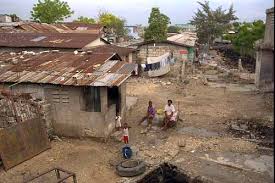
Here we see the poverty in Haiti that was heavily caused by the indemnity payed to France.
Thursday, October 10, 2013
US and GB Comparison
I believe that industrialists would be more likely to succeed in the United States. The US factories had better working conditions and instituted low earning teenage girls into their factories for cheaper labor. With less people dying because of poor conditions, and less money being paid to the workers, the factories ran smoother and were more effective. Better working conditions means workers are less likely to become ill or die. This means workers won't miss work as much and they will be happier. Farm girls were employed by factories because they could be paid at a much lower wage than men. This made the factories profit because they were getting about the same work done for less money. Overall, better conditions and lower wages paid made US a better place for industrialists.
I think the workers had a more positive experience in the US. The conditions were a lot better in the US and the workers had other options if they didn't want to work at the factory anymore. There was less pollution and death in the US than in GB. The workers obviously would want better conditions because factory work was dangerous enough. But if the workers for whatever reason decided they did not want to work at the factory anymore, they had more options than in GB. In Great Britain, there was little to no farm land, so factory work was they only way most people had to make a living. In the US, there was so much land to farm on that any factory worker could start a farm if they pleased. This was a lot better because they at least know that factory work wasn't their only option. This is why I feel workers had a better experience in the US.
 This image above depicts the conditions in Great Britain during the Industrial Revolution.
Source: http://www.casahistoria.net/factorylife.htm
I think the workers had a more positive experience in the US. The conditions were a lot better in the US and the workers had other options if they didn't want to work at the factory anymore. There was less pollution and death in the US than in GB. The workers obviously would want better conditions because factory work was dangerous enough. But if the workers for whatever reason decided they did not want to work at the factory anymore, they had more options than in GB. In Great Britain, there was little to no farm land, so factory work was they only way most people had to make a living. In the US, there was so much land to farm on that any factory worker could start a farm if they pleased. This was a lot better because they at least know that factory work wasn't their only option. This is why I feel workers had a better experience in the US.

Source: http://www.casahistoria.net/factorylife.htm
Wednesday, October 9, 2013
Napoleon
Napoleon had many different impacts on the social, economic, and political systems of France. In the "Two Views of Napoleon" worksheet, there are many examples of how he affected France. Napoleon impacted the economic system of France because he "controlled prices and encouraged new industry". Napoleon also affected the social system when he "abolished titles of nobility and serfdom" Napoleon impacted the political system of France by intending to "overthrow the Directory". The five members resigned after learning of his plan.


Above is a picture of former French Emperor, Napoleon Bonaparte
Sunday, October 6, 2013
Mary Paul Letters
Mary's tone changes throughout each of the 6 letters. In the first letter, she is excited to go to Lowell. She is asking her father to let her go, and even saying that other family members think it is a good idea also. In the second letter, Mary is happy to be in Lowell. She checks into her boarding house, buys a bonnet and other items, and asks her father to tell her friends to write to her. Mary at this point is also feeling a bit homesick because she wants to hear from everyone back home. She still likes being in Lowell despite being away from her friends and family. In the third letter, Mary is not very excited anymore. She tells her father of the many deaths at the factory. One girl slipped on icy stairs and broke her neck. Another man was killed by railroad carts. Despite all of these tragedies, she also tells about her daily life. She says that she goes to the mill at 7am, gets a break at 1230pm for lunch, and then work until 730pm. She also explains how she cannot write back to everyone who wrote to her because of how busy she is. In the fourth letter, Mary explains how she is growing very sick. Her tone seems depressing and the novelty of being in Lowell has definitely worn off by now. In the fifth letter, Mary says that she is so sick that she is unable to work. She says that the company always claims to be losing money so that they can cut the employee's wages. She also tells her father that she is looking for a new job. In the sixth and final letter, Mary says she hasn't worked in 4 days because of her health. Her tone is now very depressed, lonely and sad because she is very poor in health, wealth, and companionship. It is easy to see how Mary's tone changes throughout the letter.
Wednesday, October 2, 2013
Luddites Assignment
The Luddites were a group of people in Britain during the Industrial Revolution who opposed the wages and processes of the factories. They were based off of a mythical figure named Ned Ludd. The Luddites did not like what the new revolution was doing to the people of Britain. It was causing pollution and child labor. Below I have a letter from the time of the Luddite movement written by a soldier who was sent to guard the factories from the Luddites.
Dear cousin George,
Things are not well here in Britain. There are savages known as the Luddites who dismantle and protest factories. They revolution has been a great thing, I don't know why they would be so opposed to it. It has created new jobs and allowed goods to be cheaper and faster. It has helped some of our family here get jobs at the textile mill and it got me a job as a solider guarding the factories. I am against the Luddites because they are trying to stop a great change in Britain and are illegally dismantling machinery, such as they are doing in the picture below.
But that is all I have to write for now. Take care cousin.
From,
Harold

Dear cousin George,
Things are not well here in Britain. There are savages known as the Luddites who dismantle and protest factories. They revolution has been a great thing, I don't know why they would be so opposed to it. It has created new jobs and allowed goods to be cheaper and faster. It has helped some of our family here get jobs at the textile mill and it got me a job as a solider guarding the factories. I am against the Luddites because they are trying to stop a great change in Britain and are illegally dismantling machinery, such as they are doing in the picture below.
But that is all I have to write for now. Take care cousin.
From,
Harold

Tuesday, October 1, 2013
Marx PSA Assignment
Marx, Karl and Frederich Engels. The Communist Manifesto. Modified from the Avalon Project. 1848. Yale University.
http://avalon.law.yale.edu/subject_menus/mancont.asp(accessed September 18,
2013).
Karl Marx was a German scholar and philosopher. Marx attended University of Bonn in 1835 and University of Berlin in 1836. Karl Marx was a strong advocate of communism. Marx lived in poverty his entire life, and communism was designed with the lower-class in mind. Marx wanted to spread communism so that people did not have to suffer the cruel poverty of capitalism. At the time, capitalism was growing, but so was poverty in Europe. Communism was a plan to make all people equal in society. Marx, being a poor man, promotes communism over capitalism heavily. Marx uses the phrase, "The proletarians have nothing to lose but their chains. They have a world to win. Working men of all countries, unite!" This is saying the lower class (proletarians) have nothing to lose but their "chains" This is a metaphor for slavery chains, which Marx feels what capitalism does to the lower class. He uses words like monopolized and oppression to describe what he feels capitalism brings upon society. He ends with "Working men of all countries, unite!", and that inspires the communist reader to act upon the reading.
Monday, September 16, 2013
PSA Assignment
Engels, Fredrich. The Condition of the Working-Class in England in 1844, London: Swan Sonneschien & Co., 1892
Fredrich Engels is an English man who feels the living conditions of the working class people of Manchester are unsuitable to live in. Engels goes on the describe the houses and neighborhoods of the citizens of Manchester. Engels, having seen the horrors first-hand, shares the horrid image that is the working-men's quarter of Manchester.
(Blogger would not let me indent every line after the second line, as the citation should have been.)
Fredrich Engels is an English man who feels the living conditions of the working class people of Manchester are unsuitable to live in. Engels goes on the describe the houses and neighborhoods of the citizens of Manchester. Engels, having seen the horrors first-hand, shares the horrid image that is the working-men's quarter of Manchester.
(Blogger would not let me indent every line after the second line, as the citation should have been.)
Museum Exhibit

The title of the exhibit tells me that the topic of this poster will be about child labor. This will aid my understanding by allowing me to look for examples and think back to the topic of the poster while I read. The problem presented by the exhibit is the hardship of child labor. One thing I found sad was that children had to pull mine carts full of coal through dark and small tunnels. Another fact I found hard to believe was that small kids like the one in the picture in the right worked in factories. The most important lesson I learned was that I am lucky to live now, in the 21st century, rather than during the Industrial Revolution, where I could have been working in a factory since I was 5. It really put things into perspective when you think about how people your age back then, working for 12 hours a day in a dark factory to survive.
I saw and learned many things from the other exhibits. I learned that the revolution caused pollution, more slave labor, faster transportation, and faster manufacturing.
Sunday, September 8, 2013
Socratic Seminar: Syria
The
situation here in Syria is still very tense at the moment, but the good news is
the members of the meeting seem to be well informed of the facts. One of the
issues mentioned was the concern for loved ones. This is obviously very
important to everyone and should be a high priority. One issue that was not
touched much upon was staying put and protecting yourself. That seemed to be an
unlikely solution to the problem in Syria according to the group. The main
option discussed was fleeing the country. Some others included joining
the fight, protest, and staying in Syria for the duration of the conflict.
Obviously fleeing puts you out of harm’s way of the conflict but you risk being
caught by the government troops and possibly being killed. Joining in arms may
be a noble cause but you put yourself directly in the line of fire. Protest is
usually a good way of getting your point across but in Syria lately, that has not
gone over smoothly, usually ending in troops shooting at the protesters. And
lastly, staying put eliminates the risk of being caught while fleeing, but
keeps you in danger of being in Syria while the fight is going on. The group
seemed to decide that fleeing is the best solution for you and your loved ones
as it allows you to escape the chaos inside the country. In my opinion, the
meeting was very productive and detailed. The discussion seemed to be most
productive while on the topic of fleeing the country. The least productive part
was on the topic of staying put. I agree with the members of the meeting that
the most viable solution is to flee Syria. I also think that protest is the
least viable option as it is dangerous and very unlikely to affect the
situation. Protest has almost never worked in Syria and usually ends in the
protesters being hurt and or killed. Fleeing is the only option whose upside is
freedom from the crisis. After this meeting we hope to see change for the
better in Syria. For now we can only hope that this terror will come to an end.
Subscribe to:
Posts (Atom)